WhatsApp us →
Islamabad Taxi Services logoIslamabad Taxi Services

Auto parts

Aftermarket Car Parts in Islamabad & Rawalpindi

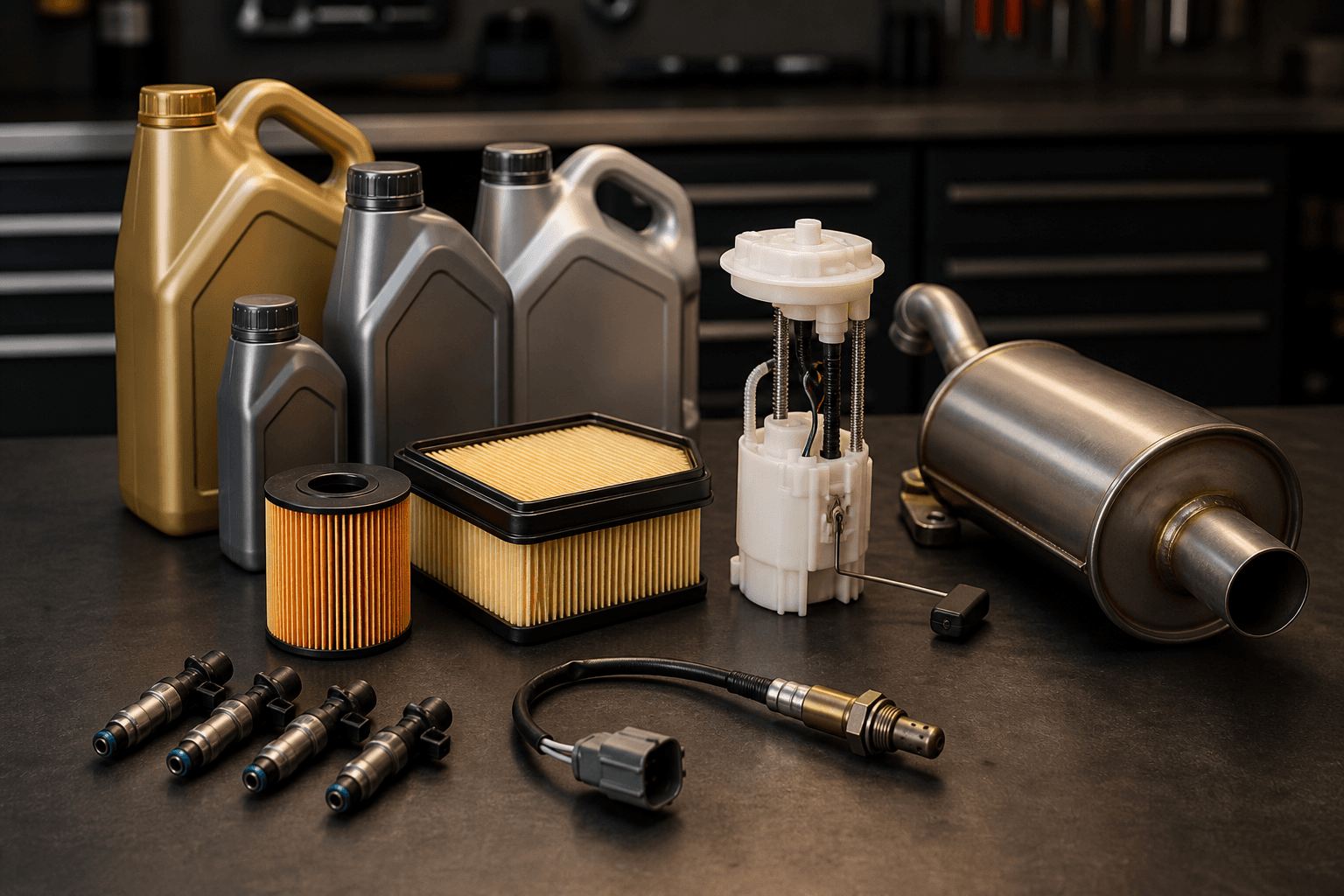
Aftermarket parts are built by independent manufacturers rather than by the carmaker or its original supplier. Quality across that description runs from excellent to unusable, so the manufacturer matters far more than the number on the label. We quote named aftermarket brands for every system, say openly where the grade is a sound decision and where it is not, and deliver across Islamabad and Rawalpindi.

Aftermarket Car Parts in Islamabad & Rawalpindi — Islamabad and Rawalpindi

Fitment & genuineness guaranteed

Wrong part? Not the grade we said? We replace it.

Every part is checked against your chassis number before it is ordered, and the grade and brand are stated on your invoice. If a part does not fit the vehicle we confirmed it against, or is not what we said it was, that is our error to carry — read the full guarantee. Delivered across Islamabad & Rawalpindi to your home, office or workshop.

Aftermarket is a supply route, not a quality level

The word describes who built a part, not how well it was built. It covers a European manufacturer that also supplies vehicle assembly lines under a different label, and it covers an anonymous casting from a factory with no engineering department at all. Both are correctly called aftermarket. Treating the whole category as one thing is the mistake that gave it its reputation here.

So we never quote aftermarket as a line item. We quote a manufacturer by name. If we cannot tell you who made something, we do not want to be the ones selling it to you.

How to judge a manufacturer rather than a figure

Four questions separate a brand worth buying from one worth avoiding. Does the manufacturer supply vehicle assembly lines anywhere in the world? Does it publish a catalogue that resolves your vehicle to one specific part rather than a vague range of models? Does it state a warranty and honour it? And has it been in this market long enough that a workshop in I-9 can tell you what those parts look like at eighty thousand kilometres?

What you pay is the weakest of the five signals. A modest figure from a serious manufacturer is common, and an ambitious one from an anonymous manufacturer is equally common. Judging on the number alone is how people end up replacing the same component twice in a year.

Where aftermarket is genuinely the right answer

Wear items on an older vehicle are the clearest case: filters, belts, bushes, drop links, dampers, wiper blades and lamps. These are parts you will buy again, on a car whose value does not justify dealer pricing, and the strong independent brands in these categories are frequently the same firms supplying carmakers elsewhere in the world.

It is also the right answer when the genuine part has simply stopped existing. A suspension arm from a reputable independent manufacturer beats an open-ended wait for something the carmaker discontinued years ago and may never press again.

Where we will argue against it

Brake friction material. Anything in a restraint system. Timing components on an interference engine. Anything carrying fuel or refrigerant under pressure. In each of those the failure mode is not inconvenience but damage or injury, and the cheap end of the aftermarket is exactly where those failures live.

We push back on unbranded electronic sensors too, for a reason worth understanding: a sensor that reads slightly wrong is worse than one that dies outright. The engine management believes it and adjusts fuelling, timing and everything else around a lie, so you chase a fault that no scanner will name.

What we ask before recommending a grade

How old the vehicle is, how much longer you intend to keep it, how it is driven, and whether it earns money. A five-year-old family car and a nine-year-old vehicle covering three hundred kilometres a day on ride-hailing work deserve different answers about the same component, and anyone who gives them the same answer is not really advising.

Then we quote at least two grades on the same page with the trade-off spelled out. The decision stays yours; our job is to make sure it is an informed one rather than a guess dressed up as a recommendation.

What this means in practice

  • Named manufacturers only — we will not quote an anonymous part
  • Two grades quoted together with the trade-off spelled out in writing
  • The warranty position stated for each brand we put in front of you
  • An honest refusal on cheap friction material, timing kits and pressurised parts
  • Recommendations based on how the vehicle is actually used, not on its badge
  • Fitment resolved to your exact variant rather than to the model name

Grades explained

Genuine, OEM, aftermarket or used — which do you need?

These four words get used interchangeably in this market and they do not mean the same thing. Here is what each one actually is, and when it is the right answer.

Genuine (dealer part)

The part sold in the vehicle manufacturer’s own box, through their dealer network — the exact item the car was built with.

Best for
Newer vehicles still under warranty, and any safety-critical part you do not want to think about again.
The trade-off
The most expensive grade, and for older or imported models it can be slow to arrive or discontinued.

OEM / original-equipment

The same part, made by the same factory that supplies the vehicle manufacturer, sold in that supplier’s own box instead of the carmaker’s.

Best for
Almost everyone. Identical engineering to the dealer part, without the carmaker’s box premium.
The trade-off
The supplier’s branding differs from the dealer part, so it will not look identical to what you removed.

Aftermarket

A part made by an independent manufacturer to fit your vehicle. Quality ranges from excellent to unusable depending on who made it.

Best for
Older vehicles, wear items, and budgets where a genuine part is out of proportion to the car’s value.
The trade-off
The brand matters more than the price. We quote named brands so you know exactly what you are buying.

Used / imported (removed)

A working part removed from a low-mileage imported vehicle — the route Pakistan’s market uses for parts that are discontinued or absurdly expensive new.

Best for
Body panels, lights, interior trim, gearboxes and engines for imported and out-of-production models.
The trade-off
Condition varies. We photograph the actual item before you commit, and it carries a shorter guarantee.

We tell you which grade we are quoting, and we name the brand. Price depends on the grade and on the exact variant your chassis number resolves to, so it is confirmed on request rather than published here.

Where this applies

Systems this matters most for

Simple & transparent

How ordering a part works

  1. 1

    Tell us the vehicle and the part

    Send the make, model, year and chassis number, plus what you need — or just describe the symptom and a photo of the old part. WhatsApp is fastest.

  2. 2

    We confirm fitment and quote

    We identify the exact variant, tell you which grades are available, and quote a fixed all-in price including delivery for each option so you can compare.

  3. 3

    We deliver — home or workshop

    You approve the option you want and we deliver to your address or straight to your mechanic, with the guarantee stated in writing on the invoice.

Good to know

Aftermarket Car Parts in Islamabad & Rawalpindi — FAQ

Will an aftermarket part void my vehicle warranty?

A part fitted outside the dealer network can be used to contest a warranty claim on the system that part belongs to, and on a vehicle still inside its factory cover that risk is not worth taking on anything significant. Once the warranty has expired the question disappears entirely. If your car is still covered, tell us and we will quote genuine first and explain what you would be exposing.

Which aftermarket brands do you actually recommend?

It depends entirely on the system, because no manufacturer is strong across all of them. The pattern we follow is to favour firms that also supply vehicle assembly lines in the category concerned, since that means their engineering has already been audited by someone with more leverage than us. Tell us the part and the vehicle and we will name the specific brands worth considering and the ones we avoid.

Is a cheaper aftermarket part always a false economy?

No, and saying so would be lazy. On a bulb, a wiper blade, a cabin filter or a bush on an older car, a sensible independent brand does the job and the saving is real money you keep. The false economy appears where a failure is expensive or dangerous rather than merely annoying. We apply that test part by part rather than telling you everything cheap is bad.

Can you mix grades on one job?

Yes, and it is often the smart way to spend. Genuine or OEM on the item that fails expensively, quality aftermarket on the consumables around it. A common example is a timing job where the kit comes from a serious manufacturer while the coolant, seals and drive belt come from a good independent brand. We lay the whole schedule out so you can see where each rupee is going.

Request a part

Tell us the vehicle and the part. We confirm the exact fitment against your chassis number, quote a fixed all-in price with delivery for each grade that genuinely exists, and bring it to your door or your workshop.

Fitment confirmed before you pay

We check the part against your chassis number, not the badge — one model name covers several different builds.

Every grade quoted side by side

Genuine, OEM, aftermarket and used-imported, with the trade-offs stated, so you choose on facts rather than on a sales pitch.

Fixed all-in price with delivery

One price covering the part and getting it to you — home, office or straight to the workshop holding your car.

WhatsAppCall