
 Book on WhatsApp
16 brands
Brands We Source
These are brands we source and supply — not brands we hold a distribution agreement with, and we will not pretend otherwise. What these pages give you instead is more useful: what each brand actually is in the market, which parts it is genuinely good at, and how to tell a real one from the counterfeits that circulate here.
A note before you browse
Why the brand matters more than the price
On a wear item, the brand is the only real information you have about what you are buying — the box tells you nothing else. That is truest in exactly the categories most heavily counterfeited in this market: spark plugs, filters, bearings and batteries.
Bosch
Bosch builds parts that reach cars on the production line long before they reach a shelf, which is why one name covers systems that normally belong to four different companies — ignition, engine-management sensors, braking, filtration, fuel delivery and starting and charging. On the European vehicles in this market it is frequently the factory fitment. On Japanese vehicles it is more often a strong aftermarket alternative to a Denso or NGK original, and that is worth stating plainly rather than implying every Bosch carton holds the part your car was built with.
Germany
What they make
Denso
Denso is a Japanese original-equipment manufacturer supplying the assembly lines of the major Japanese carmakers, which changes what its name means on this market. On a great many Japanese vehicles the air-conditioning compressor, the radiator, the coils, the plugs or the starter you are about to unbolt already carry the Denso mark, so choosing Denso is not choosing an alternative to the original — it is buying the original in the supplier’s own carton instead of the carmaker’s.
Japan
What they make
NGK / NTK
NGK is a Japanese ignition and sensor specialist rather than a general parts company, and the focus shows: spark plugs, glow plugs, ignition coils and high-tension leads under the NGK name, with oxygen and exhaust-gas sensors under NTK. It is factory fitment on a very large share of the Japanese vehicles running in Pakistan, which makes it one of the few brands where buying the aftermarket box and buying the original part are frequently the same decision.
Japan
What they makeAisin
Aisin is a Japanese original-equipment manufacturer whose products sit at the mechanical heart of Japanese vehicles: clutch assemblies, water pumps, thermostats, timing components and automatic transmissions. It is the sort of supplier most drivers have never heard of and most of their cars are full of. Where a repair involves the clutch or the cooling pump on a Japanese vehicle, an Aisin unit is frequently the same item that came out of the car.
Japan
What they make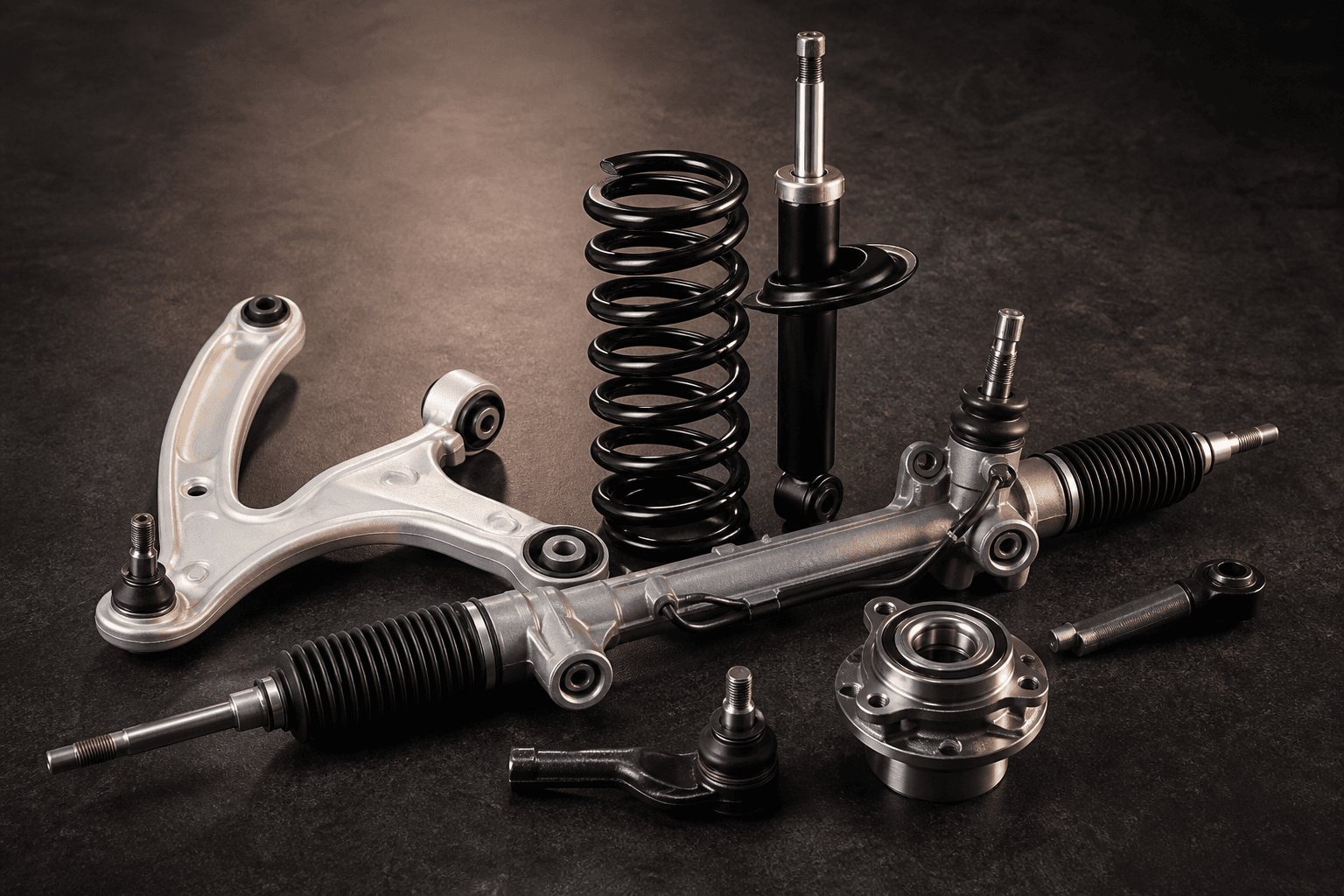
KYB
KYB is a Japanese damper manufacturer that supplies shock absorbers and strut assemblies to carmakers as original equipment, which is a narrower business than most of the names on this page and a stronger one. On a large number of Japanese vehicles the damper fitted at the factory is a KYB unit, so replacing it with a KYB restores the ride the vehicle was tuned around rather than approximating it.
Japan
What they makeMonroe
Monroe is an American ride-control brand under the Tenneco group, and its argument in this market is different from KYB’s. Where KYB’s strength is that it made the damper the vehicle was born with, Monroe’s is coverage: a very wide catalogue across Asian, American and European platforms, backed by mounting kits and protection kits sold alongside the dampers themselves.
United States
What they make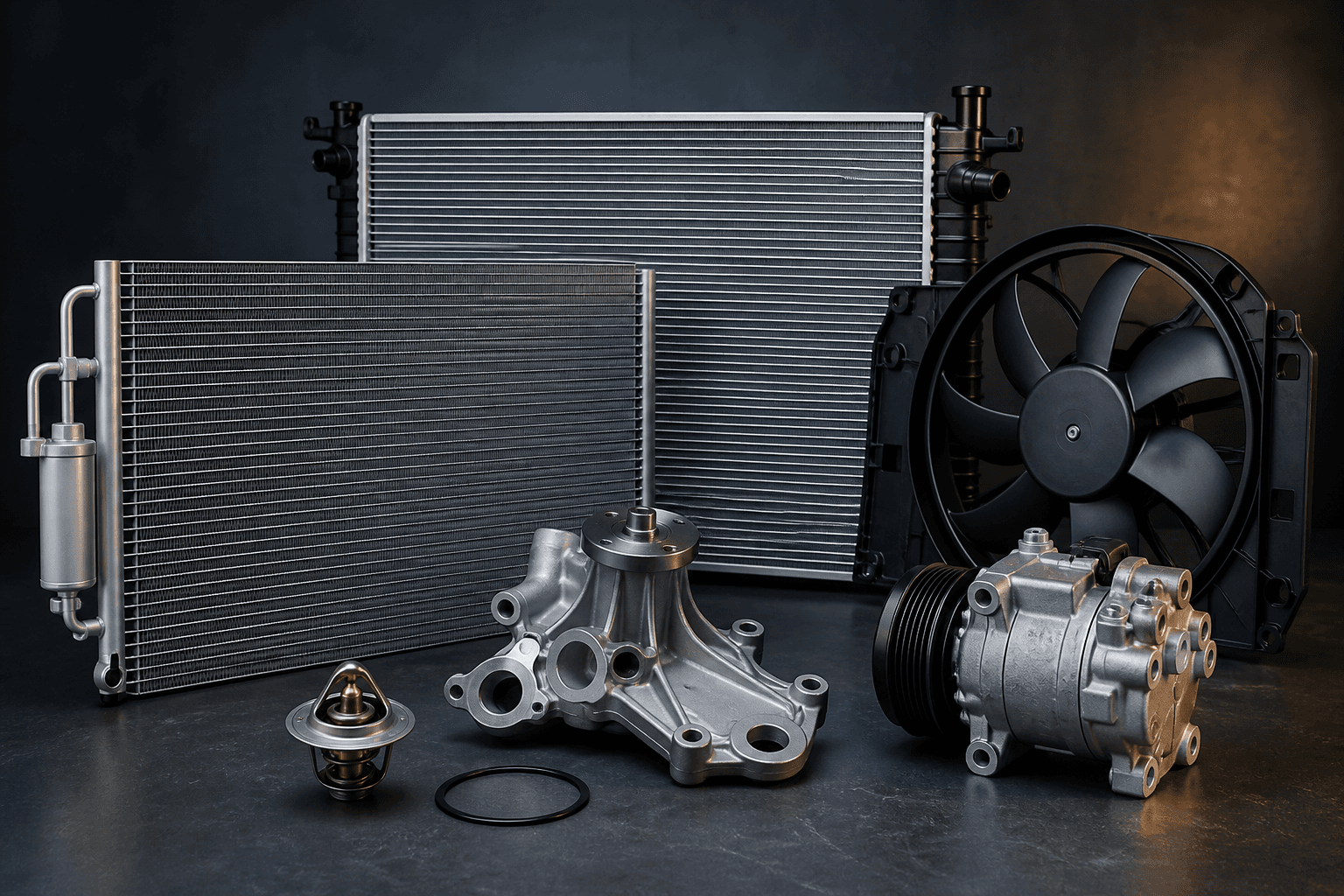
Sachs
Sachs is a German clutch and damper manufacturer within the ZF group and a long-standing original-equipment supplier to European carmakers. Its two strong suits are clutch systems — including dual-mass flywheels — and suspension dampers. On a European vehicle the Sachs clutch is very often the exact assembly the car was built with; on a Japanese one it is an alternative to the Japanese original rather than a substitute for it.
Germany
What they make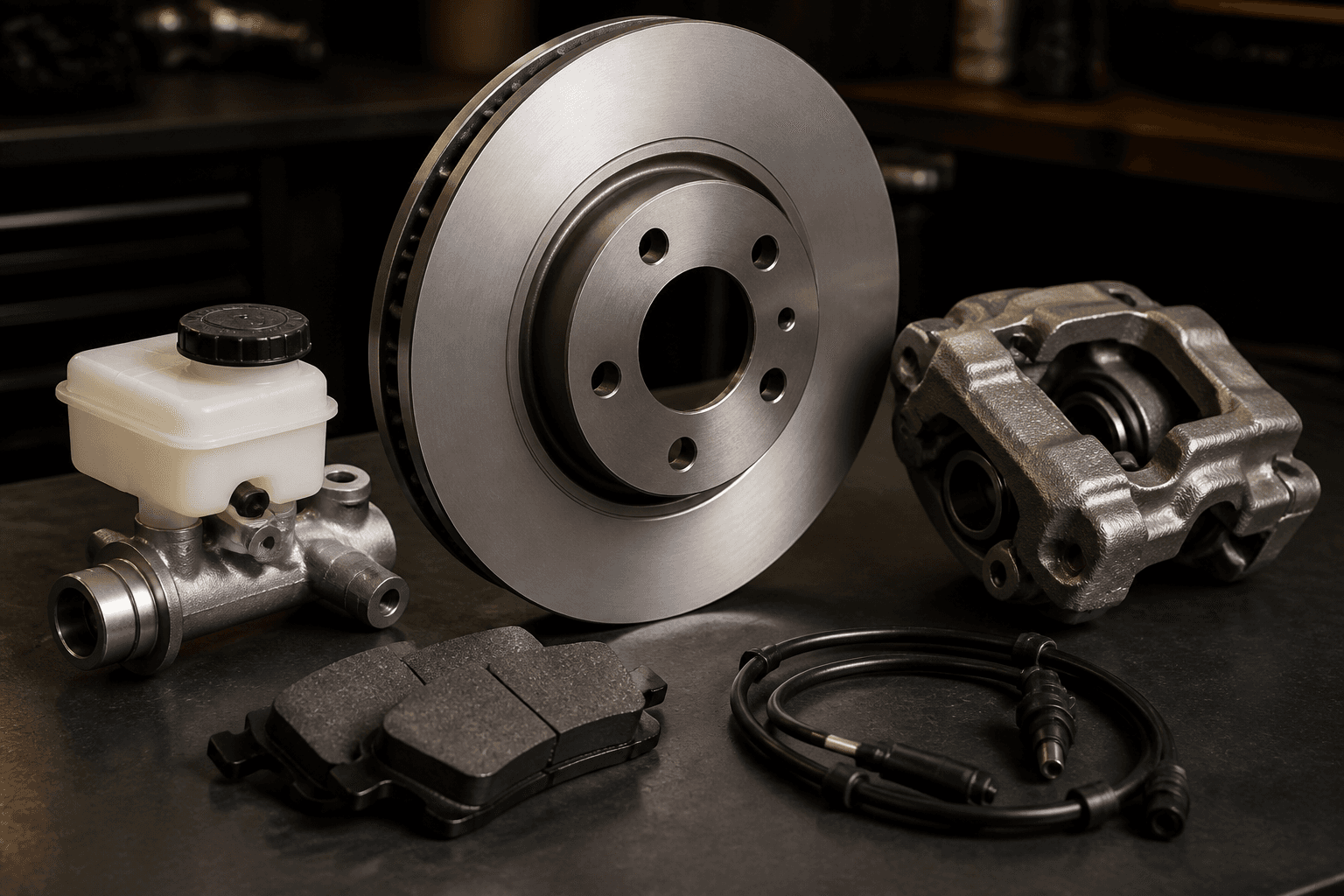
Gates
Gates is an American manufacturer of power-transmission and fluid-transfer components — timing belts, serpentine and accessory belts, tensioners, idlers and coolant hoses. It is a rubber and materials company as much as a car-parts company, and belts are the product where that distinction actually shows up in service life.
United States
What they makeMAHLE
MAHLE is a German original-equipment supplier that occupies two quite separate shelves: filtration on one side, and engine internals and thermal management on the other. Very few names can supply both the oil filter for a routine service and the piston and ring set for the rebuild of the same engine, and that breadth is the reason its filter boxes carry weight — the company sits inside the engine as well as on the outside of it.
Germany
What they makeMANN-FILTER
MANN-FILTER is a German filtration specialist rather than a general parts manufacturer — oil, air, fuel and cabin filters, and effectively nothing else. That narrowness is the point. A company that makes only filters competes on media, pleat geometry and valve design rather than on catalogue breadth, and it supplies filtration to vehicle manufacturers as original equipment as well as to the aftermarket.
Germany
What they makeValeo
Valeo is a French original-equipment supplier working across clutches, air-conditioning, starting and charging, lighting and wiper systems. It is a common factory fitment on European vehicles and appears on a number of Asian platforms too, and it runs a substantial remanufacturing operation, which makes it one of the more useful names when a new alternator or starter for an older car is out of proportion to what the car is worth.
France
What they makeTRW
TRW is a braking and steering name with deep original-equipment heritage, now sold through ZF Aftermarket. Its catalogue is narrow and safety-critical: friction, discs, calipers, master cylinders, and the steering and linkage components that decide where the car points. Brands that concentrate on the systems that stop and steer a vehicle are judged differently from brands that make everything, and rightly so.
Germany / United States
What they makeExide
Exide is one of the long-established automotive battery names in the Pakistani market, stocked by battery shops across Islamabad and Rawalpindi in the conventional lead-acid and maintenance-free formats that most cars here use. Batteries are a category where local presence matters more than badge prestige: what decides whether a battery was a good purchase is how fresh it was when it was sold and how easily a claim can be made if it fails early.
Established presence in Pakistan
What they makeAGS
AGS is a Pakistani battery manufacturer, and being made here changes the arithmetic in ways that matter more than most badge comparisons. A locally produced battery moves from factory to shelf in a short chain, so stock tends to be fresher than imported equivalents that have crossed an ocean and waited at a port. If it fails inside its warranty, the claim is handled in the same city rather than becoming an international shipping problem.
Pakistan
What they makeOSRAM
OSRAM is a German lighting manufacturer whose automotive range covers headlight, fog, indicator and interior bulbs, including higher-output halogen types and gas-discharge units. Bulbs are among the few parts a driver can change without tools, which is exactly why the accessory market around them is so crowded with imitations and with upgrades that promise more than physics allows.
Germany
What they make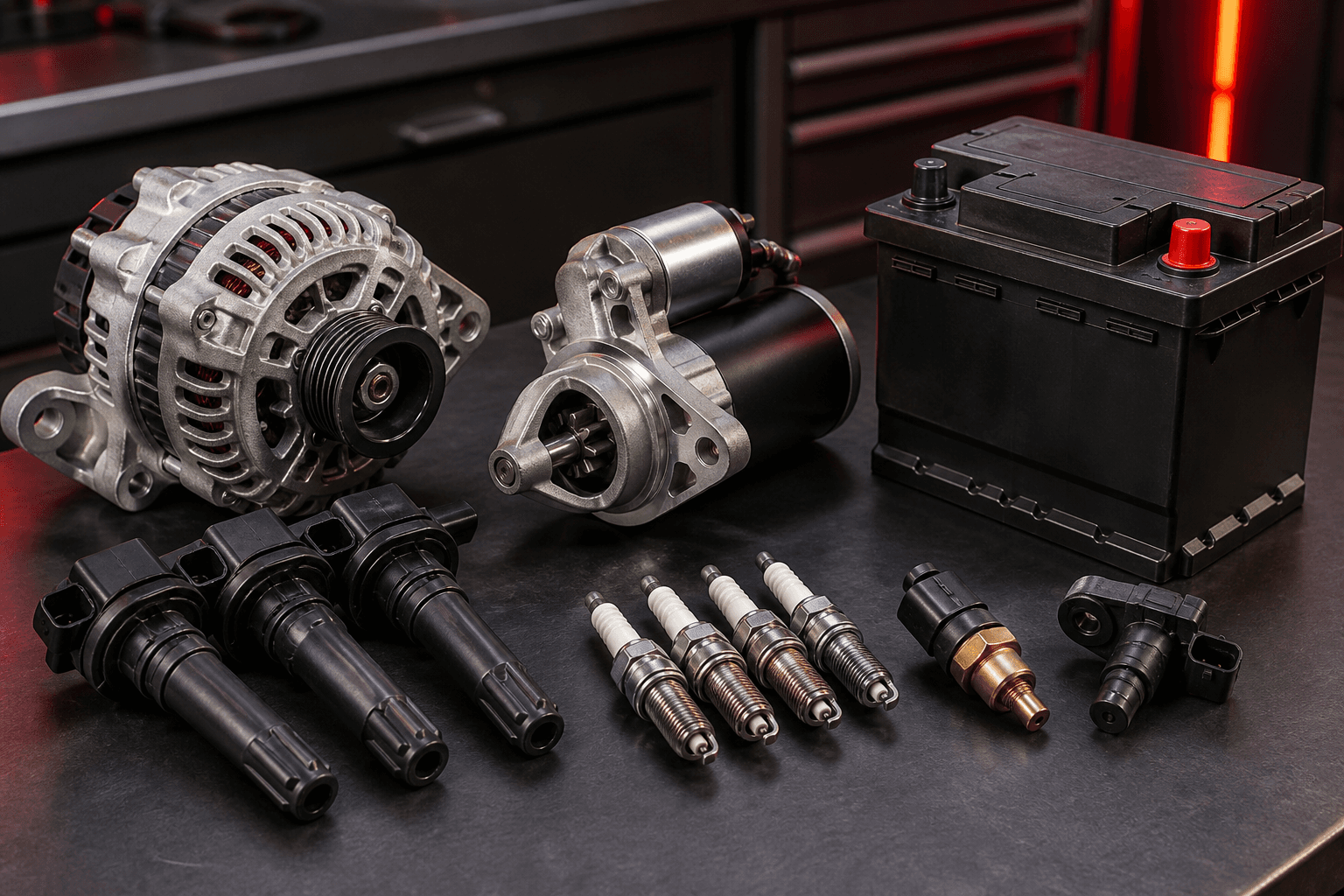
Koito
Koito is a Japanese manufacturer of complete lamp assemblies supplied to Japanese carmakers as original equipment. It makes the whole unit — housing, reflector, lens and optics — rather than the bulb inside it, which is why so many headlights and tail lights on Japanese vehicles carry a moulded Koito mark somewhere on the body. Replacing a damaged lamp with a Koito unit means replacing it with the item the vehicle was designed around.
Japan
What they makeGrades explained
Genuine, OEM, aftermarket or used — which do you need?
These four words get used interchangeably in this market and they do not mean the same thing. Here is what each one actually is, and when it is the right answer.
Genuine (dealer part)
The part sold in the vehicle manufacturer’s own box, through their dealer network — the exact item the car was built with.
- Best for
- Newer vehicles still under warranty, and any safety-critical part you do not want to think about again.
- The trade-off
- The most expensive grade, and for older or imported models it can be slow to arrive or discontinued.
OEM / original-equipment
The same part, made by the same factory that supplies the vehicle manufacturer, sold in that supplier’s own box instead of the carmaker’s.
- Best for
- Almost everyone. Identical engineering to the dealer part, without the carmaker’s box premium.
- The trade-off
- The supplier’s branding differs from the dealer part, so it will not look identical to what you removed.
Aftermarket
A part made by an independent manufacturer to fit your vehicle. Quality ranges from excellent to unusable depending on who made it.
- Best for
- Older vehicles, wear items, and budgets where a genuine part is out of proportion to the car’s value.
- The trade-off
- The brand matters more than the price. We quote named brands so you know exactly what you are buying.
Used / imported (removed)
A working part removed from a low-mileage imported vehicle — the route Pakistan’s market uses for parts that are discontinued or absurdly expensive new.
- Best for
- Body panels, lights, interior trim, gearboxes and engines for imported and out-of-production models.
- The trade-off
- Condition varies. We photograph the actual item before you commit, and it carries a shorter guarantee.
| Grade | What it actually is | Best for | The trade-off |
|---|---|---|---|
| Genuine (dealer part) | The part sold in the vehicle manufacturer’s own box, through their dealer network — the exact item the car was built with. | Newer vehicles still under warranty, and any safety-critical part you do not want to think about again. | The most expensive grade, and for older or imported models it can be slow to arrive or discontinued. |
| OEM / original-equipment | The same part, made by the same factory that supplies the vehicle manufacturer, sold in that supplier’s own box instead of the carmaker’s. | Almost everyone. Identical engineering to the dealer part, without the carmaker’s box premium. | The supplier’s branding differs from the dealer part, so it will not look identical to what you removed. |
| Aftermarket | A part made by an independent manufacturer to fit your vehicle. Quality ranges from excellent to unusable depending on who made it. | Older vehicles, wear items, and budgets where a genuine part is out of proportion to the car’s value. | The brand matters more than the price. We quote named brands so you know exactly what you are buying. |
| Used / imported (removed) | A working part removed from a low-mileage imported vehicle — the route Pakistan’s market uses for parts that are discontinued or absurdly expensive new. | Body panels, lights, interior trim, gearboxes and engines for imported and out-of-production models. | Condition varies. We photograph the actual item before you commit, and it carries a shorter guarantee. |
We tell you which grade we are quoting, and we name the brand. Price depends on the grade and on the exact variant your chassis number resolves to, so it is confirmed on request rather than published here.
Other ways to find your part
Want a specific brand?
Name the brand and the part and we will tell you honestly whether we can source it, what grade it is, and what a realistic timeline looks like. If we cannot get the real thing, we will say so rather than send you something wearing the name.
Fitment confirmed before you pay
We check the part against your chassis number, not the badge — one model name covers several different builds.
Every grade quoted side by side
Genuine, OEM, aftermarket and used-imported, with the trade-offs stated, so you choose on facts rather than on a sales pitch.
Fixed all-in price with delivery
One price covering the part and getting it to you — home, office or straight to the workshop holding your car.
 WhatsApp