
 Book on WhatsApp

 WhatsApp us
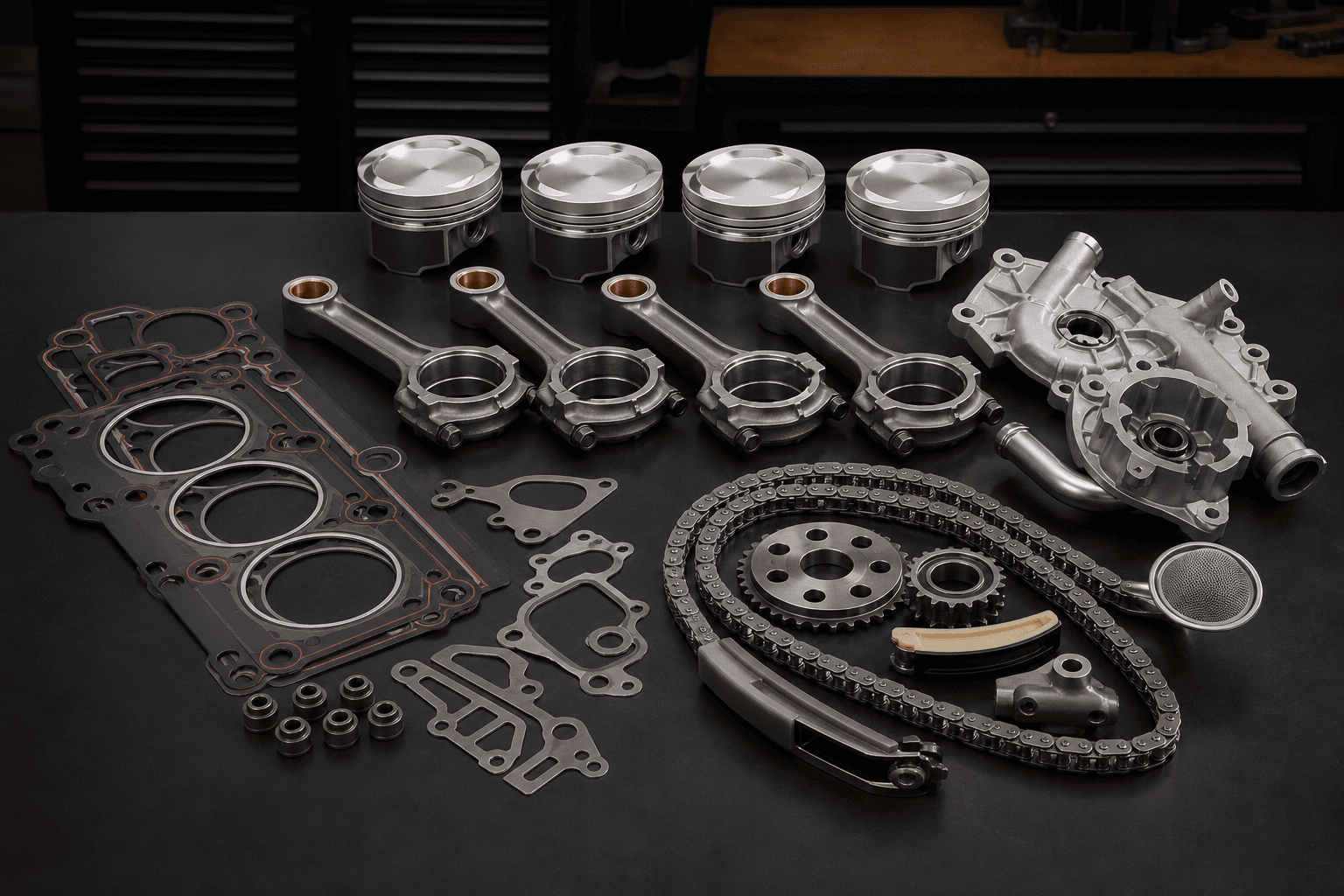
The four grades, in the order the market confuses them
Genuine means the vehicle manufacturer’s own box, bought through their dealer network. OEM means the identical component from the factory that supplies that manufacturer, sold under the supplier’s name — Denso, Aisin, Bosch and NGK were feeding assembly lines long before anyone thought of them as aftermarket brands. Aftermarket means a part designed and built by an independent company to fit your vehicle. Used-imported means an original removed from a vehicle abroad and shipped here.
The confusion sits almost entirely in the first two words. In this market the word genuine has drifted to mean not counterfeit, which is a completely different claim. A boxed OEM water pump is not genuine in the strict sense and is absolutely not fake. A loose part in an unmarked bag might be either. That gap is where most parts disputes here begin, and it is why we never use one word to mean both things.
How to tell which one you are actually being sold
Ask for the grade by name and ask for it in writing. A seller who offers only the word original has told you nothing you can hold him to. Then check three things when the part arrives: the box, the markings on the part itself, and how the figure compares with the rest of the market.
A genuine box carries the carmaker’s branding and a dealer label. An OEM box carries the supplier’s branding, and the part underneath usually wears the same casting or moulding marks as the one you removed, because it came off the same tooling. An aftermarket part is branded by its maker throughout. A used original carries factory markings and honest wear. If the box says one thing and the part inside says another, stop there and ask.
When genuine is worth the premium, and when it is not
On a vehicle still inside its factory warranty, buy genuine and stop thinking about it — a non-genuine component in a warranty dispute is an argument you will lose. On items where a failure leaves no second chance, such as a steering rack or a brake master cylinder, genuine or OEM is the honest recommendation and we will not talk you down from it.
On a fifteen-year-old car it is a different calculation. A dealer-boxed window regulator can be a meaningful fraction of what the whole vehicle is worth, and that is not a sensible place to put your money. A quality part from a named independent manufacturer is the right answer far more often than a dealer counter will ever admit, and we would rather tell you that than take the bigger sale.
The counterfeit problem, stated plainly
Counterfeiting here is real and it is competent. Fake plugs, fake filters and fake bearings are packaged well enough that experienced mechanics are fooled by the box alone. The economics explain themselves: a copy is cheap to produce and the brand being copied already paid for the reputation.
Our protection against it is not a hologram sticker. It is the channel we buy through, the fact that the manufacturer and grade are named in writing before you pay, and a written undertaking that a part which is not what we said it was comes back at our cost. That undertaking is the only thing in this transaction a buyer can actually enforce, which is why we put it on paper rather than in a slogan.
What we confirm in writing before you pay
Every quote names three specific things: the grade, the manufacturer, and the exact variant your chassis number resolved to. Each one is checkable the moment the part is in your hands, which is the point of naming them.
If a part does not fit the vehicle we confirmed it against, that error is ours to carry. If the grade or the brand is not what the quote said, the same applies. We would rather lose a sale by admitting an aftermarket item is aftermarket than win it by calling everything original, because the second approach only ever works once per customer.